- Platform Engineering
- System Design
- autoscaling floor
- egress
- idle capacity
- observability spend
- rightsizing
- unit cost
Cost Optimization for Backend Systems: Architecture, Autoscaling, and Observability
Cost Optimization for Backend Systems cuts waste without hiding risk. Learn how architecture, autoscaling, and metrics keep spend tied to real demand.

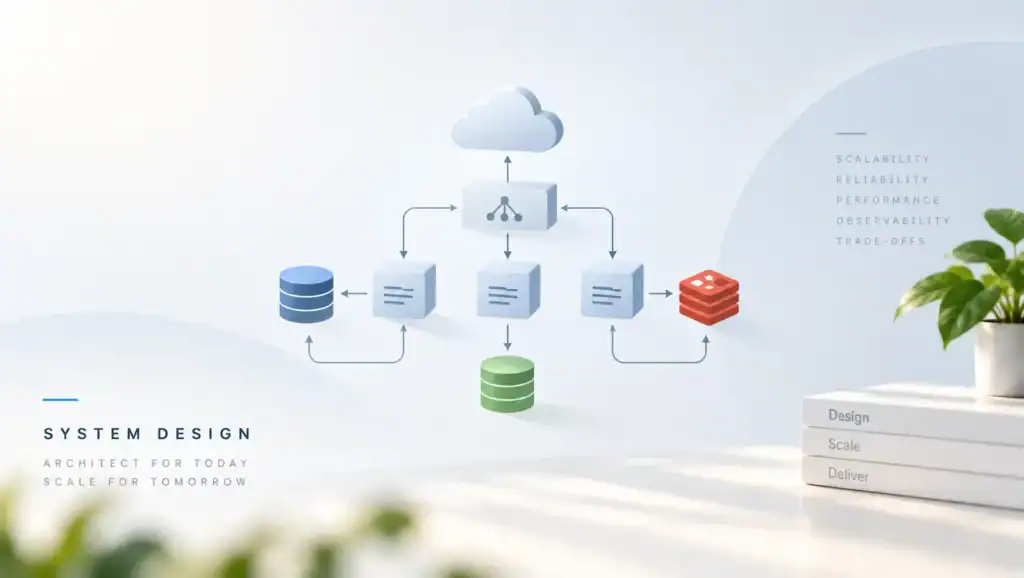
Cost Optimization for Backend Systems means you pay for useful work, not for idle habit. When the bill grows slower than successful requests, the design is healthy. If you cut the bill by missing the latency promise, you did not optimize.
You moved the cost onto users and on-call. Therefore tie every cut to a unit of value and to a reliability guard.
What It Is and Why It Fails
Optimization is a design loop. You measure cost per successful request, find the largest waste, change the architecture or the scale policy, and check that users are still fine. The AWS cost optimization pillar frames this as a steady practice, not a one-time purge. When the practice is a quarterly panic, teams delete capacity they need at the next peak.
It fails when the metric is the total bill alone. A bigger product should cost more. A flat bill with falling traffic can still be waste.
Also a falling bill with a burning error budget is a failed cut. SLOs for backend engineers belong next to the cost chart. If you cannot see both, you will optimize the wrong one.
A common mistake I have seen is rightsizing from a seven day average. The average hides the peak. Then the smaller fleet falls over on Monday.
Use the peak you must survive, plus headroom for a cold start, as the floor. The average can guide scale-in. It must not set the minimum by itself.
Another failure is saving compute while ignoring egress, storage, and logs. Those lines often pass compute once the service is chatty or verbose. When you only watch virtual machines, you will celebrate a small win and miss the real bill. Split the bill by request path before you pick a project.
Unit Cost
Pick a unit users would recognize. Cost per thousand successful checkouts is better than cost per host. When failures are cheap in the metric because you drop them, you will reward outages.
Therefore count only successes in the denominator, and still watch the error rate beside it. If success falls and unit cost looks great, the cut was harmful.
Attribute shared platforms fairly. A queue used by ten teams should not land on one owner by accident. Also keep a small unallocated bucket so you do not fake precision.
Perfect chargeback is expensive. A stable split that people trust is enough to drive behavior.
Waste You Can See
Idle dev clusters, forgotten volumes, and old snapshots are the easy waste. When they have no traffic and no owner, delete them on a schedule. Also require an expiry on sandbox accounts. A cluster named temporary that has lived for a year is production in cost and a toy in care.
Over-provisioned floors are the harder waste. They exist because someone was burned by a cold start. Do not remove the floor until startup is faster or the scale-out drill proves you can meet latency. Cutting the floor first is how you buy a cheaper outage.
Architecture That Spends Less
The biggest savings are usually architectural. Cache public reads so the origin does less. Batch writes so you pay for fewer round trips.
Move cold data to cheaper storage. Stop copying data across regions when a user does not need it there. Edge caching can remove most origin reads for public content. If the hit rate is low because the cache key is wrong, fix the key before you buy more servers.
Autoscaling backend systems should follow real demand, with a floor for safety and a ceiling for mistakes. The Kubernetes horizontal pod autoscaler can do that for pods if the metric is honest. When the metric is noisy, you pay for thrash. Calm scale-in saves more money than a clever new instance type.
Multi-region deployments multiply cost. A second region is justified by latency or survival, not by habit. When egress between regions is a top line, narrow what you replicate.
A full copy of logs in every region is a common silent tax. Keep one home for analytics unless a rule forces a local copy.
Data shape matters. A hot index you never query still costs memory. A retention policy you never enforce still costs disk.
Therefore review the largest tables and buckets by growth, not by name. Drop or tier what you cannot tie to a feature. If nobody will sign the feature, nobody should pay for the bytes.
A Cut You Can Repeat
- Rank services by spend and by unit cost, not by opinion.
- Pair each candidate with the SLO it might hurt.
- Change one lever, such as cache key, floor, or retention.
- Watch unit cost and the objective for a full peak cycle.
- Keep the change only if the objective holds.
- Delete the unused resource so it cannot return by drift.
Trade-offs You Should Name
A lower floor saves money and risks a slow spike. A reserved plan saves money and punishes you if demand falls. Cheap storage saves money and slows restore.
Verbose logs help incidents and dominate the bill. Also, spot or preemptible capacity is cheap and vanishes at the worst time. Use it for work that can restart, not for the only copy of a write path.
| Lever. | Best when. | Main risk. | Reliability effect. |
|---|---|---|---|
| Scale-in. | Use it when demand is uneven. | Thrash if the metric is noisy. | Fine if the floor holds the peak start. |
| Cache. | Use it when reads repeat and are public. | Stale or private data leaks. | Also cuts origin load. |
| Cheaper storage. | Use it when data is cold. | Slow restore. | Bad if the time objective is short. |
| Fewer regions. | Use it when the second site is unused. | You lose a failover path. | Also simpler to operate. |
Committed discounts are a trade with your future. When demand is stable, a commitment can be rational. When you are about to redesign, a commitment locks in the old shape.
Do not buy a year of the waste you plan to delete. Also keep an exit smaller than the commitment so a traffic drop does not become a stranded bill.
Pitfalls and Failure Modes
The classic failure is a cost incident that is actually an outage. Someone lowered a limit, the queue grew, and users timed out. The bill looked better for an hour.
Then the incident response cost more than the save. When you change capacity, roll it out like a code change. Watch the objective. Keep a fast rollback.
- Setting minimum capacity from an average, not from the peak.
- Cutting replicas below what a deploy or a failure needs.
- Chasing instance discounts while egress is the real line.
- Sampling logs so hard that the next incident has no evidence.
- Leaving unowned disks, addresses, and snapshots for months.
- Optimizing a test environment that nobody can delete by policy.
Observability is both a tool and a cost. High-cardinality metrics and full body logs can cost more than the service. Also they can save you during a bad deploy.
Tier them. Keep the SLI and the request rate at full fidelity. Sample debug logs.
Drop labels you do not alert on. If you cannot name the chart, you should not pay for the series.
Shared savings plans fail politically. One team cuts a cluster that another team needed at month end. Therefore owners must be clear.
A platform change needs a note and a rollback, just like an app deploy. Surprise rightsizing is how you train teams to hide capacity.
We once hit a bottleneck when a log pipeline retained debug lines for a product that had already launched. The service was small. The logs were not. A retention default of a few days for debug, and longer for security audit, would have saved more than any instance resize that quarter.
A Guard You Can Start From
The record below is illustrative. It tracks cost per thousand successes and refuses to scale in through the SLO. Use your own unit.
Alert when unit cost jumps while the objective is flat, because that is waste. Alert when the objective burns after a capacity cut, because that is a bad save.
service: checkout
unit: cost_per_1000_success
include:
  - compute
  - egress
  - storage
  - logs
guards:
  min_capacity: warm_floor
  slo: checkout_objective
alerts:
  unit_cost_up_slo_flat: ticket
  slo_burn_after_cut: page
change_rule: one lever at a time, rollback ready
Put this next to the autoscaler, not in a finance tool nobody opens during a launch. When finance and engineering use different units, they will argue past each other. One unit, one owner, and a monthly review of the top five lines is enough process. More process will not beat a missing chart.
Performance, Scale, and Cost
Performance and cost meet in the hot path. A cheaper instance that adds latency can force you to run more of them, so you save nothing. Measure cost and latency together after a resize.
If you need more replicas to hold the same latency, the cheaper type lost. Also watch cold start. A dense pack that boots slowly will force a higher floor and erase the savings.
At large scale, small percentages are real money, and so are small mistakes. A one-line log on every request can become the top line. Therefore budget cardinality and bytes the way you budget CPU.
Review new metrics in code review. A label per user is a cost bug, not a nice-to-have.
Multi-tenant platforms should show unit cost per tenant class. One noisy tenant can ruin the average and push you to overbuild. When you can isolate or limit that tenant, the rest of the fleet can shrink.
Fairness is a cost tool. It is also how you avoid punishing every customer for one integration.
Revisit architecture when unit cost rises even though autoscaling works. Scaling a wasteful path just buys waste faster. Fix the query, the cache, or the fan-out first.
Then let the scaler do its job. If you skip that order, the bill tracks traffic and the design never gets better.
Finally, publish the result. A team that sees unit cost and the objective will make better daily choices than a team that sees a surprise invoice. Keep the loop short. A number nobody sees will not change a pull request.
Key Takeaways
- Optimize cost per success, with the SLO visible beside it.
- Set capacity floors from the peak and from startup time, not from the average.
- Hunt egress, storage, and logs, not only compute.
- Change one lever at a time and keep a rollback.
- Cache and shape data before you buy a discount on waste.
- Expire idle environments and unowned disks on a schedule.
FAQ
Should you turn off autoscaling to save money?
No. Autoscaling is how you avoid paying peak prices all month. Also keep a floor so a quiet hour does not strand you for the next spike.
If the scaler thrashes, fix the metric and the cooldown. Do not replace it with a permanent peak fleet.
How do you cut log cost safely?
Keep full fidelity on the SLI and on errors. Then sample or shorten debug logs. Also set a retention that matches how you actually investigate. If you have never read a log older than a week, do not pay to store it for a year.
When is a second region too expensive?
When it does not improve user latency or a real failover objective enough to justify the copy and the egress. Also when the team cannot staff it. Shut it or narrow it. A region you will not fail over to is a replica you are afraid to use.
Who owns the unit cost?
The service owner owns the number, with finance supplying rates. When ownership is a shared inbox, the number will not move. Also review it on a schedule, not only when the invoice spikes. The spike is a late signal.
Pick the top service by spend. Compute cost per thousand successes, and put the SLO on the same page.
Then change one lever, such as retention, cache key, or floor. After a peak cycle, keep the change only if the objective still holds and the unit cost fell.
Share this:

Related articles
HTTP/2 vs HTTP/3: Multiplexing, QUIC, and Real-World Performance
HTTP/2 vs HTTP/3 compares streams, head-of-line blocking, and QUIC so you can pick a protocol that stays fast…
Microservice System Design
Executive Summary: Splitting a monolith into services without design discipline trades one problem for distributed complexity. I cover…
Semantic Versioning in Practice: Breaking Changes, Deprecation, and Trust
Semantic Versioning in Practice shows how you mark breaking changes, deprecate old APIs, and keep the trust of…
[…] not only instance hours. Pending pods, cross-zone traffic, and chatty scale events all add spend. Cost optimization should track cost per successful request, not only the monthly […]