What is Atomic Design Pattern?
Atomic Design is the one of methodology that can accelerate the process of creating modular designs.

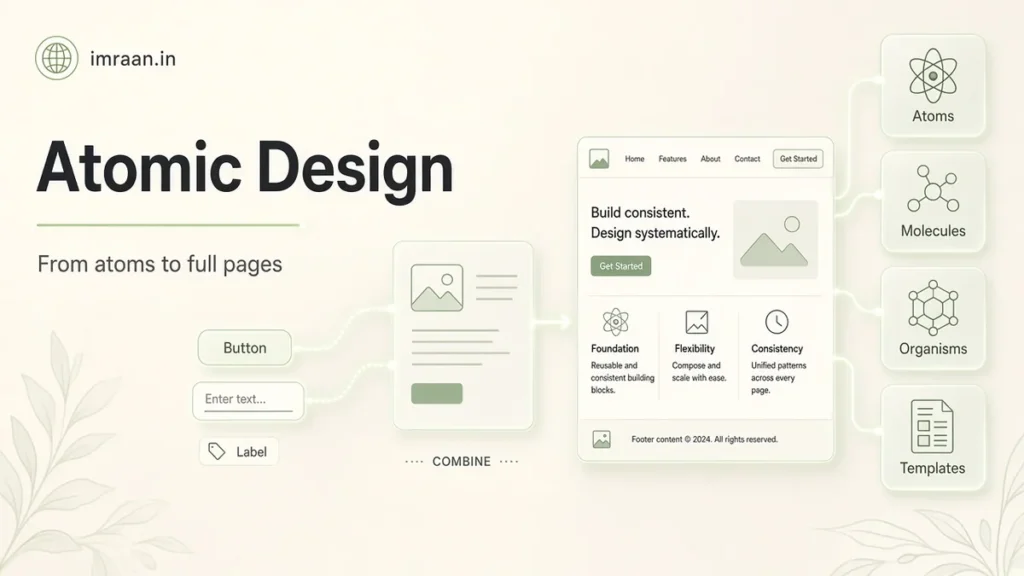
Atoms
Basic building blocks in HTML tags, such as a form label, an input or a button.
Molecules
Grouping atoms together, such as combining a button, input and form label to build functionality.
For example, a form label, input or button aren’t too useful by themselves, but combining them together as a form and now they can actually do something together.
Organisms
Combining molecules together to form organisms that make up a distinct section of an interface (i.e. navigation bar)
Organisms can consist of similar and/or different molecule types. For example, a masthead organism might consist of diverse components like a logo, primary navigation, search form, and a list of social media channels. But a “product grid” organism might consist of the same molecule (possibly containing a product image, product title and price) repeated over and over again.
Templates
Consisting mostly of groups of organisms to form a page, where clients can see a final design in place.
Pages
Pages are specific instances of templates. An ecosystem that views different template renders. We can create multiple ecosystems into a single environment: the application.
Related articles
Instantly Edit Websites with Chrome designMode
Use Chrome document.designMode for temporary copy and layout mockups. Steps, limits, a11y warnings, and when to use DevTools…
Vanilla JavaScript Equivalent jQuery Tasks Replaced for Performance
Let’s be honest: jQuery has been a lifesaver. For years, it smoothed over the rough edges of cross-browser…
Structuring Your JavaScript Applications
As web applications become more complex, the way we structure our JavaScript code matters more than ever. If…



Modular UI used to feel like buzzword soup until I read Brad Frost and then posts like this. Nice summary.
Do you keep molecules in Storybook or just in Figma? Still figuring out our tooling.
Atomic design finally made sense when I mapped our buttons and form fields as atoms. Less chaos in the design system now.
We tried this on a client redesign and the handoff between design and engineering got way smoother.
Honestly I used to skip organisms and jump straight to templates. Bad idea. Your explanation of the hierarchy helped.