AI Tools for Developers: An Opinionated Matrix
2026 developer AI tooling matrix: IDE agents, MCP, Claude Skills, local models, and evals. Opinionated picks without unsourced productivity stats.


The 2024 list on this URL still talked about CodeWhisperer-era assistants and waved around unsourced productivity percentages. That is not useful in 2026. Instead, here is an opinionated matrix for how I actually pick developer AI tooling: coding agents, MCP, local models, and evals. No fake “92% of engineers” stats.
How to read this matrix
Score each tool on four axes for your repo, not a vendor keynote:
- Context: Can it see the whole workspace (and only the workspace) without leaking secrets?
- Agency: Chat completion vs multi-step edit/test loops.
- Control plane: Prompts only, or shared tools via MCP / skills / harnesses?
- Proof: Do you have evals, or only vibes?
2026 developer AI tooling matrix
| Lane | What I use / watch | When it wins | Watch-outs |
|---|---|---|---|
| Coding agent (IDE) | Cursor, Claude Code / Claude in IDE, GitHub Copilot Chat (agent mode where available) | Multi-file refactors, test generation, navigating unfamiliar modules | Silent wrong edits, so always diff-review. Agents also burn tokens fast on huge monorepos. |
| Inline completion | Copilot, Supermaven-class completers, or vendor IDE completions | Boilerplate, repetitive API usage, local pattern mimicry | Trains bad APIs into muscle memory if you tab-accept blindly. |
| Tool protocol (MCP) | Model Context Protocol servers for docs, DB, browser, issue trackers | Same tools from IDE, CLI, and chat without bespoke plugins | Auth scopes; never expose prod write tools to a free-form agent without allowlists. |
| Reusable skills | Claude Skills (structured instruction packs) | Repeatable ops: SEO remediations, release notes, incident drafts | Skills rot, so version them like code. |
| Agent harness | Custom loops / frameworks described in AI agent harnesses | Batch jobs, repo-wide migrations, CI agents with budgets | Without timeouts, retries, and grading, harnesses thrash. |
| Local / private models | Ollama or llama.cpp for small coding/embed models; vLLM/TGI when you self-host larger weights | Air-gapped code, cheap embeddings, offline demos | Quality gap vs frontier APIs on hard reasoning; measure before mandating local-only. |
| Evals | Promptfoo, DeepEval, or a thin custom harness with golden fixtures | Regressions on prompts, tools, and RAG before deploy | Toy evals that never match production tickets lie to you. |
| Observability for LLM apps | OpenTelemetry traces + provider dashboards; Langfuse/Helicone-class where needed | Debugging latency, cost, and bad tool calls | Logging full prompts with PII is a compliance incident waiting to happen. |
What I would install on a greenfield team this month
- One IDE agent the team agrees on (do not run three agents fighting over the same files).
- MCP for the systems humans already use (repo search, tickets, staging browser).
- A skill pack for your top three repetitive chores.
- A local embedding model for private semantic search over internal docs (see the Node example in JavaScript in AI development).
- An eval suite with at least 20 real tasks from last quarter’s tickets.
Honest tradeoffs (no brochure)
- Copilot-class completion is still the lowest-friction win for many Java/TypeScript shops. Still, it is not an autonomous engineer.
- Cursor-class agents shine when the repo is indexed and you write crisp acceptance criteria. However, they fail when requirements are vague and tests are absent.
- Amazon’s old CodeWhisperer branding is not how I plan stacks in 2026; treat AWS coding aids as one more completer inside the console/IDE story, not a fifth “must have” logo.
- Sentry / error products with AI summaries help triage. They do not replace owning the fix or verifying the patch.
- If a vendor cites a single percentage productivity lift without methodology, ignore the number. Run a two-week A/B on your PR cycle time and escaped defects instead.
Minimal operating rules
- Secrets stay in a vault; agents get redacted env or mock credentials in sandboxes.
- Every agent PR requires human review on auth, payments, and data deletion paths.
- Prefer tools that export traces. If you cannot replay why a change happened, you cannot debug it.
- Wire workflow automation (for example n8n AI workflows) for event-driven glue; keep IDE agents for code.
Pick a lane, measure it, then deepen. Collecting five overlapping AI subscriptions is not a strategy. In contrast, a thin stack with MCP, one agent, local embeddings where privacy demands it, and evals you trust will beat a logo wall every time.
Related: AI Image Generation Models: How to Evaluate and Choose, Top Five Free Generative AI Platforms, and Jev AI Model: The Fastest Adopted Model in AI Gateway History
Share this:

Related articles
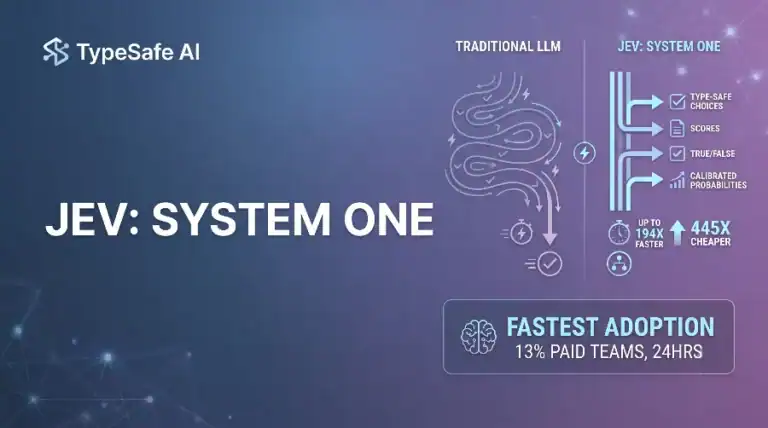
Jev AI Model: The Fastest Adopted Model in AI Gateway History
Jev reached nearly 13% of paid AI Gateway teams unusually fast. Here is what that adoption curve means…
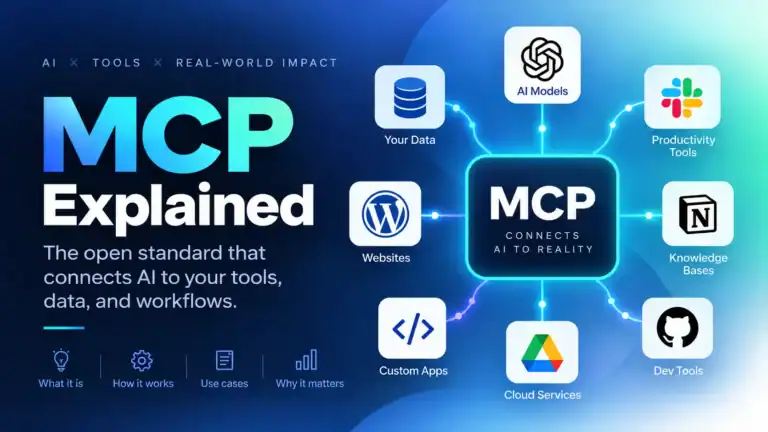
MCP Explained: Model Context Protocol Guide
MCP standardizes how apps expose tools, resources, and prompts to LLMs. I cover architecture, security, and working server…
AI Agent Harnesses, Explained
The model is the brain; the harness is the room it works in. A field guide to loops,…

Brown-bag slide one is basically the summary. Focus stays on ai dev tooling, not another research fog.
Left a paper flag in my notebook on the key caution. Wording around ai dev tooling slipped into the runbook.
This helped. Especially which AI tools stick in the workflow.
Translated one diagram into our own names. Conversation opened on daily ai workflow naturally.
Annotated PDF now lives in the team drive. Start with essential ai apps, polish later.